1.1 The Web
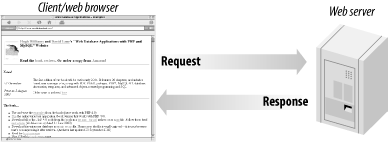
When you browse the Web, you use your web browser to request resources from a web server and the web server responds with the resources. You make these requests by filling in and submitting forms, clicking on links, or typing URLs into your browser. Often, resources are static HTML pages that are displayed in the browser. Figure 1-1 shows how a web browser communicates with a web server to retrieve this book's home page. This is the classic two-tier or client-server architecture used on the Web.
Figure 1-1. A two-tier architecture where a web browser makes a request and the web server responds
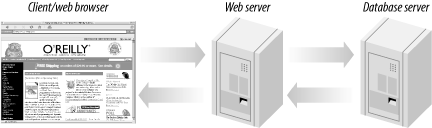
A web server is not sophisticated storage software. Complicated operations on data, done by commercial sites and anyone else presenting lots of dynamic data, should be handled by a separate database. This leads to a more complex architecture with three-tiers: the browser is still the client tier, the web server becomes the middle tier, and the database is the third or database tier. Figure 1-2 shows how a web browser requests a resource that's generated from a database, and how the database and web server respond to the request.
Figure 1-2. A three-tier architecture where a web browser requests a resource, and a response is generated from a database